 info@dimitroulakos.gr


 22620 56888

How to Use Metal Shelving
How to Use Metal Shelving
CORRECT USE & MANAGEMENT OF METAL SHELVING AND RACKING
The most common and efficient way to address a storage requirement is through shelving and racking, most commonly made of metal. From a large logistics centre to a product storage shelf in the home, operating rules must be followed to achieve maximum system performance, correct use and, above all, safety. In professional racking systems in particular—pallet racking, cantilever racking and medium-duty shelving—these rules must be strictly observed, as failure to follow them may result in complete system collapse and serious consequences for the health and safety of the operator.
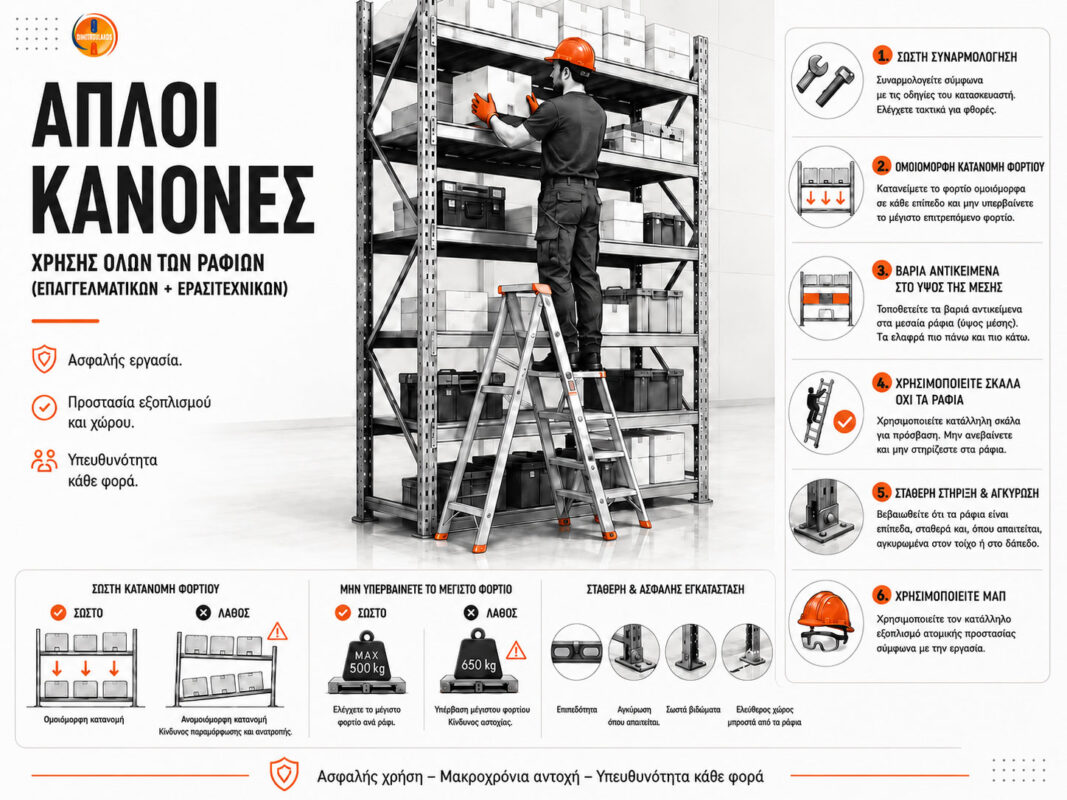
BASIC RULES FOR USING ALL SHELVING & RACKING (PROFESSIONAL + DOMESTIC)
Assemble the shelving or racking in accordance with the manufacturer’s instructions.
Any stated load capacity per shelf or level applies only to a uniformly distributed load. A uniformly distributed load means that the weight is spread across the full length and depth of the shelf.
Place heavier items at waist height. This reduces the need to bend down or overreach when handling them.
Do not climb on shelving or racking. Use an appropriate ladder or access equipment to reach items stored at height.
If the system is not sufficiently stable, use appropriate wall or floor anchoring, or additional support from adjacent shelving, as required
Use all required personal protective equipment (PPE) correctly. Gloves and safety footwear can protect you from many common hazards.
ADDITIONAL RULES FOR PALLET RACKING
These rules must be followed consistently, as any negligence can result in significant consequences and costs.
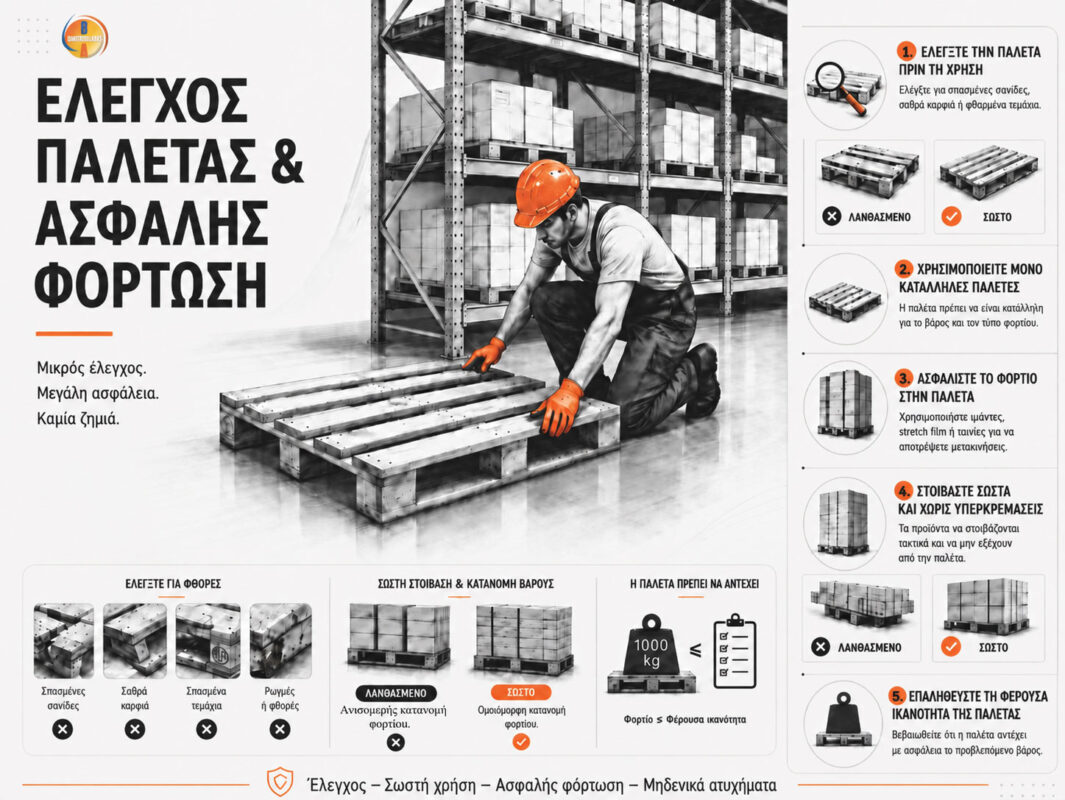
- First and most importantly, inspect the pallet. Visually check for broken deck boards and blocks and confirm that the pallet is capable of supporting the intended load. It should be noted that many warehouse accidents result from unsuitable pallets that fail while stored on the racking.
- Secure the goods on the pallet. Ensure that products are properly stacked and do not extend beyond the pallet.
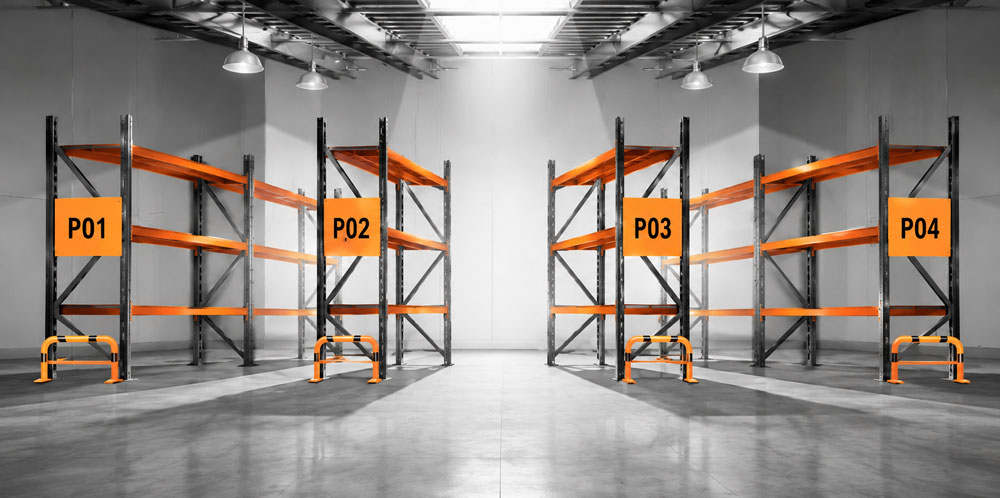
- The main components of pallet racking are the frames (vertical elements with internal bracing and floor anchoring), the beams (on which the pallets are placed), and auxiliary accessories such as guards and cross-bracing. Also check the floor for cracks caused by high point loads. Before the start of each shift, visually inspect the system for deformation or damage. If significant damage is found, inform the responsible person, unload the system and arrange for repair. Indicative measurements are shown in the photographs below.
- Check that the beams are fitted with the dedicated safety locks at their ends to prevent accidental dislodgement. If any are missing, replace them carefully before continuing operation.
- Pallet racking systems are designed for dry, stable loads and not for pallet tanks or liquid loads. If this type of load is nevertheless used, the operator must handle it at very low speed, allow the liquid to stabilise and verify that the pallet is capable of supporting the load. In the event of an earthquake, the movement of such a pallet will, as expected, be significantly greater than that of a pallet carrying a dry load because of the behaviour of the liquid.
- If you are using the system for the first time, become familiar with the racking aisles at very low speed. Ask the warehouse manager about beam load capacities or check the relevant load signage.
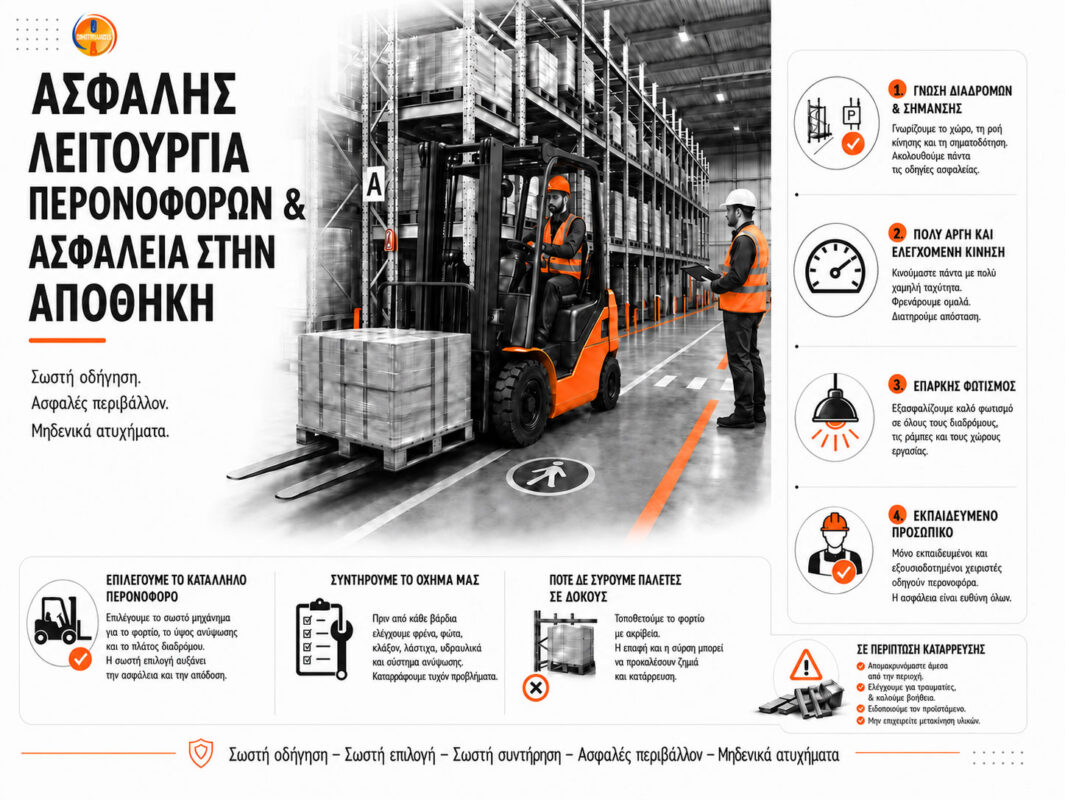
- Ensure that pallet weight is distributed as evenly as possible. For example, on a beam level designed for two pallets, if only one pallet is stored, place it at the side position rather than in the middle. Likewise, if a 2,700 mm beam has a total capacity of 2,100 kg, this means that three 700 kg pallets may be stored—not two 1,050 kg pallets or one 2,100 kg pallet. Never exceed the manufacturer’s stated load capacity per pallet position.
- Ensure that pallets are properly and evenly supported on the beams. A 1,200 mm Euro pallet should extend by at least 50 mm beyond the front beam. If this condition is not met, the risk of the pallet falling during handling is very high.
- Ensure that the warehouse has adequate lighting. Poor lighting significantly increases the risk of accidents.
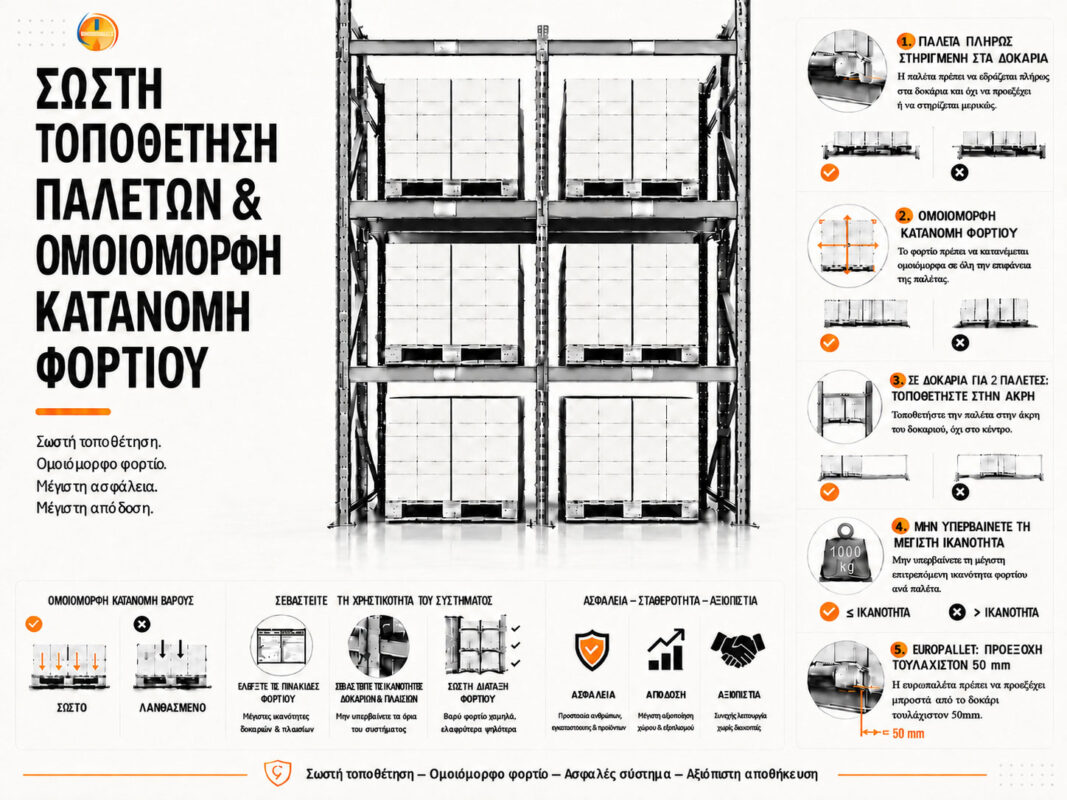
- Warehouse personnel must be trained and informed about potential hazards by the responsible safety professional. An untrained forklift operator can cause damage to both the racking system and personnel.
- In the event that any section collapses, move away safely and report the incident so that the system can be repaired.
- Maintain your forklift in accordance with the manufacturer’s maintenance schedule to support smooth and reliable warehouse operations.
- If more than one forklift is used in the warehouse, select the appropriate truck according to the load requirements and the aisle in which it will operate.
- When operating the system, do not drag pallets across the beams. Lift and position them using the correct handling procedure.
- Use all required personal protective equipment (PPE) correctly. Pay close attention to safety signage and use gloves, safety footwear and any additional PPE recommended by the safety professional in the occupational risk assessment.